
When reading email addresses in Turkish, the dot (.) is pronounced as nokta, the @ symbol as at, the hyphen (-) as tire, and the underscore (_) as alt tire.
Turkish Language
33 posts

In Turkish, the words var and yok are used to express the presence or absence of something. They are very common in everyday speech and are often used with locations to say whether something exists somewhere.

Daha is used to form the comparative degree of adjectives and adverbs. In English, it is usually translated as “more” or “even more.” En is used to form the superlative degree of adjectives and adverbs and is translated as “the most.” Examples:
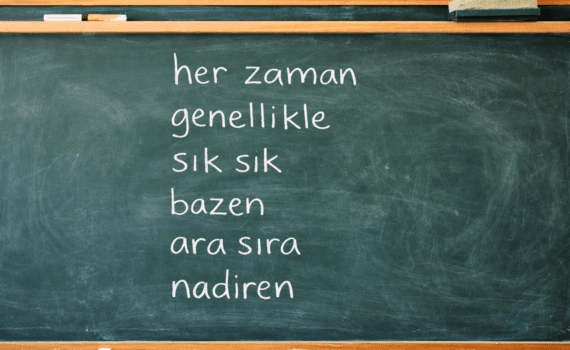
In this article you will find the most common adverbs in Turkish with translations and examples. These words will help you speak Turkish more naturally and better understand everyday language.

This article explains possessive pronouns and possessive suffixes in Turkish. It shows how possession is expressed with suffixes attached to nouns, how vowel harmony affects these forms, and how possessive suffixes interact with case endings. The article also includes examples and tables to help learners understand how to use possessive forms in everyday Turkish.

This table shows the names of planets and basic space objects in Turkish with their English equivalents. It includes the Sun, the Moon, planets of the Solar System, and other important astronomical terms such as galaxy, comet, asteroid, and universe. This vocabulary will help you talk about space and astronomy in Turkish.

In this article, you will learn the names of common professions in Turkish. The list includes jobs from different fields such as education, medicine, business, arts, and modern digital professions, along with their English meanings. This vocabulary will help you talk about jobs and professions in Turkish and expand your everyday language skills.

Learn Turkish footwear vocabulary with clear English meanings. Discover words for shoes, boots, sandals, sneakers, slippers, and more. Perfect for beginners, travelers, and Turkish language learners.

Learn essential Turkish travel vocabulary with clear English translations. Explore words for airport, passport, flight, hotel, tickets, and more. Perfect for beginners, travelers, and Turkish language learners.

Learn essential Turkish winter and New Year vocabulary with clear English meanings. Perfect for beginners and seasonal language learning.

Learn romantic Turkish words and phrases for Valentine’s Day: love, kiss, flowers, heart and sweet expressions. Perfect for beginners and holiday-themed language learning.

A practical guide to Turkish numbers: cardinal numbers, compound numerals, hundreds, and usage with nouns. Clear rules, examples, and explanations for beginners.
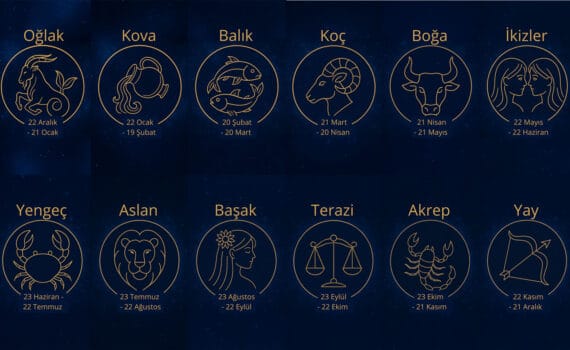
Learn how to say the Zodiac signs in Turkish! This article provides a complete list of signs from Capricorn (Oğlak) to Sagittarius (Yay), with English translations and dates. Perfect for learners who want to expand their vocabulary and explore Turkish words related to astrology and horoscopes.

Learn essential Turkish words about autumn: leaves, rain, fog, wind, harvest, and cozy symbols of the season. This article includes a complete word list with English translations — from sonbahar (autumn) and yaprak (leaf) to üzüm (grapes) and hüzün (sadness). Perfect for learners who want to expand their Turkish vocabulary with seasonal expressions.

Learn Turkish jewelry vocabulary with translations into English. Discover how to say “ring,” “earrings,” “bracelet,” “necklace,” and other jewelry items in Turkish. A complete word list with explanations and cultural notes to help expand your vocabulary and improve your understanding of Turkish.

Learn Turkish vocabulary on the topic of gadgets and office equipment! This article includes a complete list of essential words such as laptop, smartphone, printer, scanner, projector, and more. Each term is provided in Turkish with English translation, making it easy to expand your vocabulary and master technology-related expressions.

Learn Turkish family vocabulary with clear examples! Discover how relatives are called differently on the father’s and mother’s side in Turkish. Includes translations into English and practical examples for everyday use.

Possessive suffixes in Turkish indicate to whom an object belongs, who its owner is. They are added to nouns and change their form depending on the personal pronoun.

Learn the most beautiful flower names in Turkish with English translations! 🌸 From tulips and roses to lavender and sunflowers — expand your Turkish vocabulary with this easy-to-follow floral word list. Perfect for language learners, travelers, and anyone interested in Turkish culture and nature.

Learn essential Turkish kitchenware vocabulary with English translations! 🥄🍽 Discover the most common Turkish words for plates, bowls, cups, forks, pots, and more. Perfect for travelers, language learners, and anyone interested in Turkish culture and daily life. Easy-to-follow list to boost your Turkish vocabulary fast!

Word lists on the topic of clothing in Turkish. A useful vocabulary with examples: outerwear, accessories, footwear, and everyday clothing.

Learn how to use the Turkish Dative Case (Yönelme Durumu) to express direction and movement. Includes rules, suffixes (-e, -a, -ye, -ya), personal pronouns, common verbs that require the dative, and example sentences with translations. Perfect for Turkish learners!

Learn Turkish names for fruits and vegetables easily! Expand your Turkish vocabulary with this helpful list of common fruits and vegetables, perfect for travelers, language learners, and food lovers. Discover how to say apple, tomato, cucumber, and more in Turkish!

Learn how to use the Present Continuous Tense (Şimdiki Zaman) in Turkish. Discover rules, examples, and sentence structures to express actions happening right now or around the current time. Perfect for Turkish language learners who want to master speaking about the present.

İsim Cümleleri (Nominal Sentences) are nominal sentences in the Turkish language, meaning sentences without a verb-predicate in the form of an action. They are built around a noun, adjective, or pronoun, and express a state, characteristic, or possession.

Learn how to form the plural in Turkish with clear explanations, suffix rules (-lar / -ler), vowel harmony, and practical examples. Includes tips for irregular cases and interactive exercises to test your skills.

Learn how to introduce yourself in Turkish with simple, practical dialogue examples. Perfect for beginners who want to master Turkish greetings and basic conversation skills.

Practice everyday Turkish with a simple market dialogue. Learn how to ask for fruits, respond politely, and understand common phrases used while shopping in Turkey

Learn how to form and use Yes/No questions in Turkish with clear explanations, examples, and comparisons to English. Perfect for beginners and language learners!
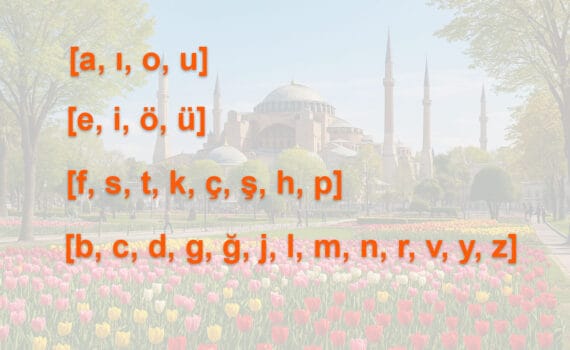
Learn the core principles of Turkish vowel and consonant harmony with clear explanations and examples. Discover how suffixes change based on vowel types and consonant voicing, including the rules of Büyük Ünlü Uyumu (major vowel harmony), Küçük Ünlü Uyumu (minor vowel harmony), and final consonant alternations in Turkish grammar.